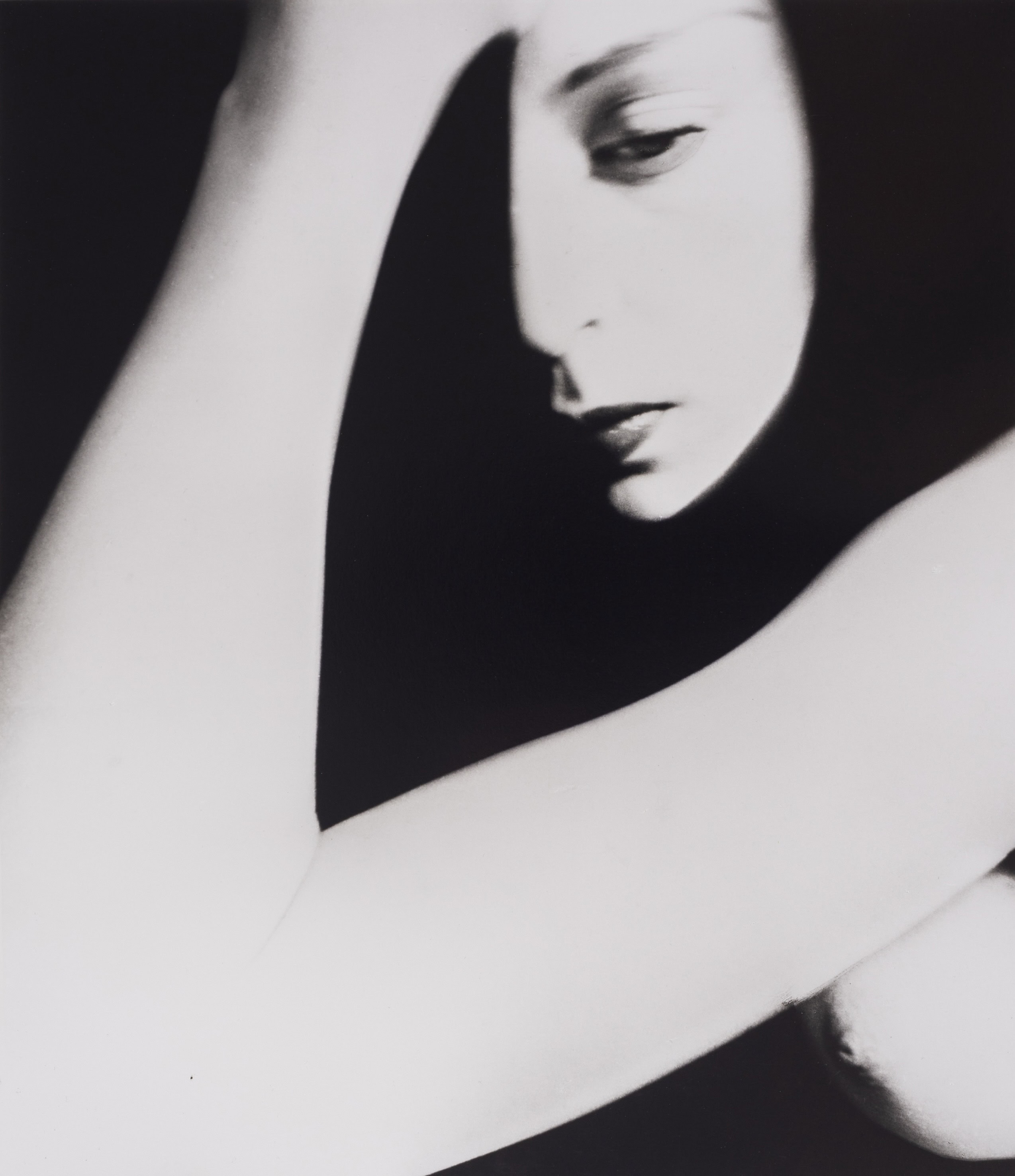
Bill BrandtNude, London, 1952
Enquire
Signed
Silver gelatin print, printed in the 1970s
16 x 12 inches
Signed
Silver gelatin print, printed in the 1970s
16 x 12 inches
This artwork is a signed silver gelatin print, produced in the 1970s.
Framing
We recommend book-mounting this print in a wide passe-partout and then framing it in a black wooden box. This classic method not only gives visual priority to the image but also fits seamlessly into most interiors. However, if you prefer a different look, other framing options are also available. Additionally, to ensure the highest levels of production, all of our frames are handcrafted to museum standards by one of the UK’s leading workshops. Please note that prices include tax, but exclude framing and shipping costs.
Shipping
We aim to ship unframed works within 2 weeks and framed works within 6 weeks. All orders are shipped from the UK and we always strive to deliver your print as quickly as possible. However, the delivery times may vary, depending on the specific artwork and your location. For exact details, please get in touch. Please note that prices include tax, but exclude framing and shipping costs.
Artwork In Detail
Bill Brandt’s sublime studies of the human body are surreal and meticulously crafted. His acerbic eye and brooding approach to image-making bridge the realms of documentary and abstraction, producing images that are simultaneously arresting and timeless.
Bill Brandt
Nude, London, 1952
EnquireBill Brandt
Germany
B. 1904–1983
EnquireBill Brandt was one of the masters of twentieth-century photography. Initially fascinated by surrealism before focussing on the traditions and characters of Victorian England, taken as a whole Brandt’s work constitutes one of the most varied and vivid social documents of Great Britain. Brandt moved from Paris to London in 1933. His photography at this time focused on British society and the traditions and characters of Victorian England which fascinated him. Both as a photojournalist and an Anglophile, Brandt was drawn to the British class system, and much of his work highlights its inequalities during the inter-war years.
Brandt’s early work was a mixture of photojournalism for magazines such as Picture Post, and personal photographic projects that he undertook, some being published as books such as The English At Home (1936), and London At Night (1938). Brandt’s view of England was constructed, in part, to ‘satisfy his childhood fantasies.’ In fact, some of his early photographs for The English at Home were staged scenes in which Brandt used his family and friends as models. Though based in London, in the late 1930s Brandt travelled to the North of England to document its towns and industry. His work from this period continued to reflect social inequality and particularly to poor living conditions of the English working class. From the mid-1940s, Brandt’s work began to change completely. Moving away from photojournalism, Brandt returned to focus on Surrealism, which had been an early influence from his time spent in Paris. He concentrated almost exclusively on the female nude for the remainder of his career. Using a wide angle lens, Brandt produced abstracted photographs which depict the nude form in surreal ways.
Brandt’s work has been exhibited internationally in New York, London, Barcelona and Paris.