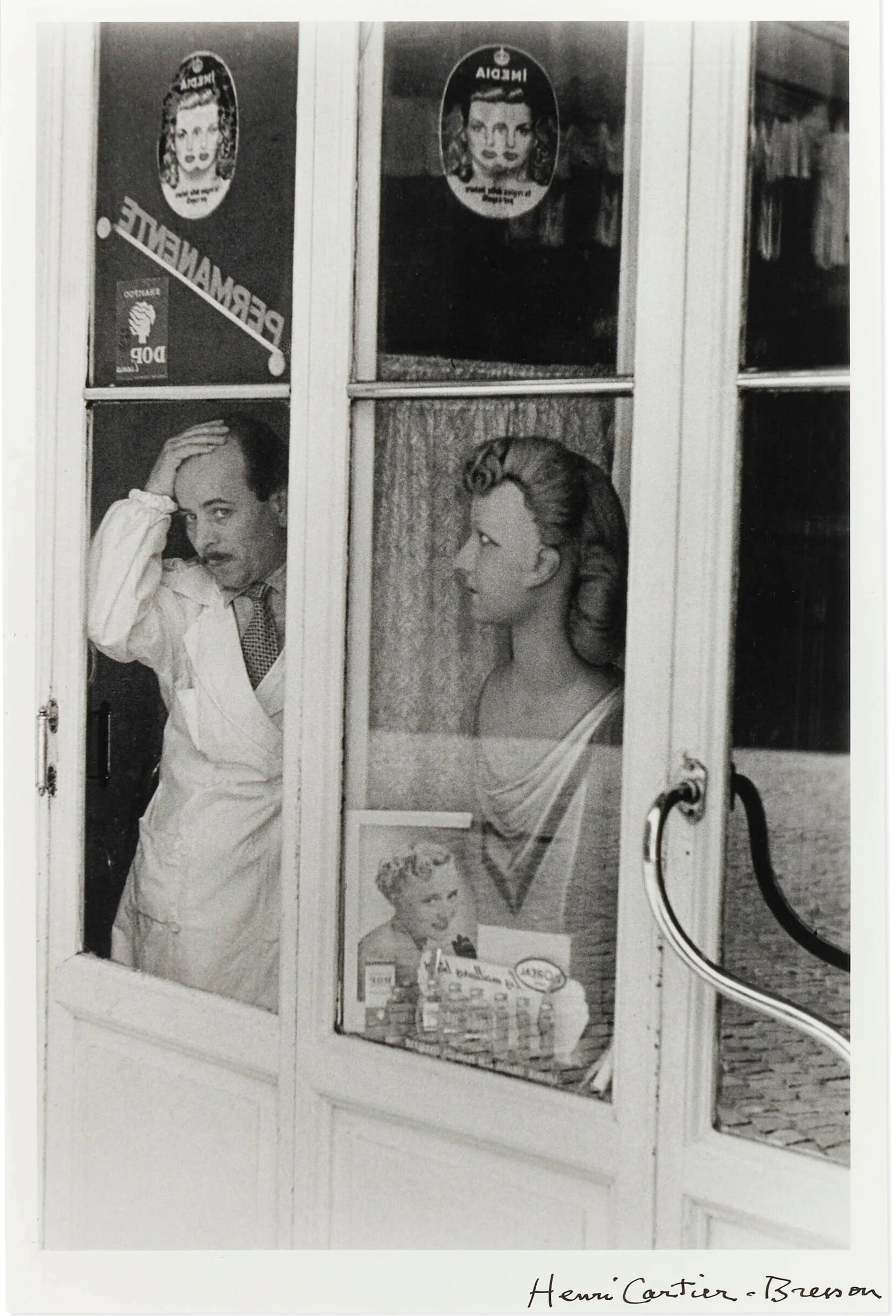
Henri Cartier-BressonRome, Italy, 1951
Enquire
Signed
Silver gelatin print, printed c. 1990
Image size: 17 1/2 x 11 1/2 inches Paper size: 20 x 15 3/4 inches
Signed
Silver gelatin print, printed c. 1990
Image size: 17 1/2 x 11 1/2 inches Paper size: 20 x 15 3/4 inches
This artwork is a silver gelatin print, signed by the artist on recto.
Framing
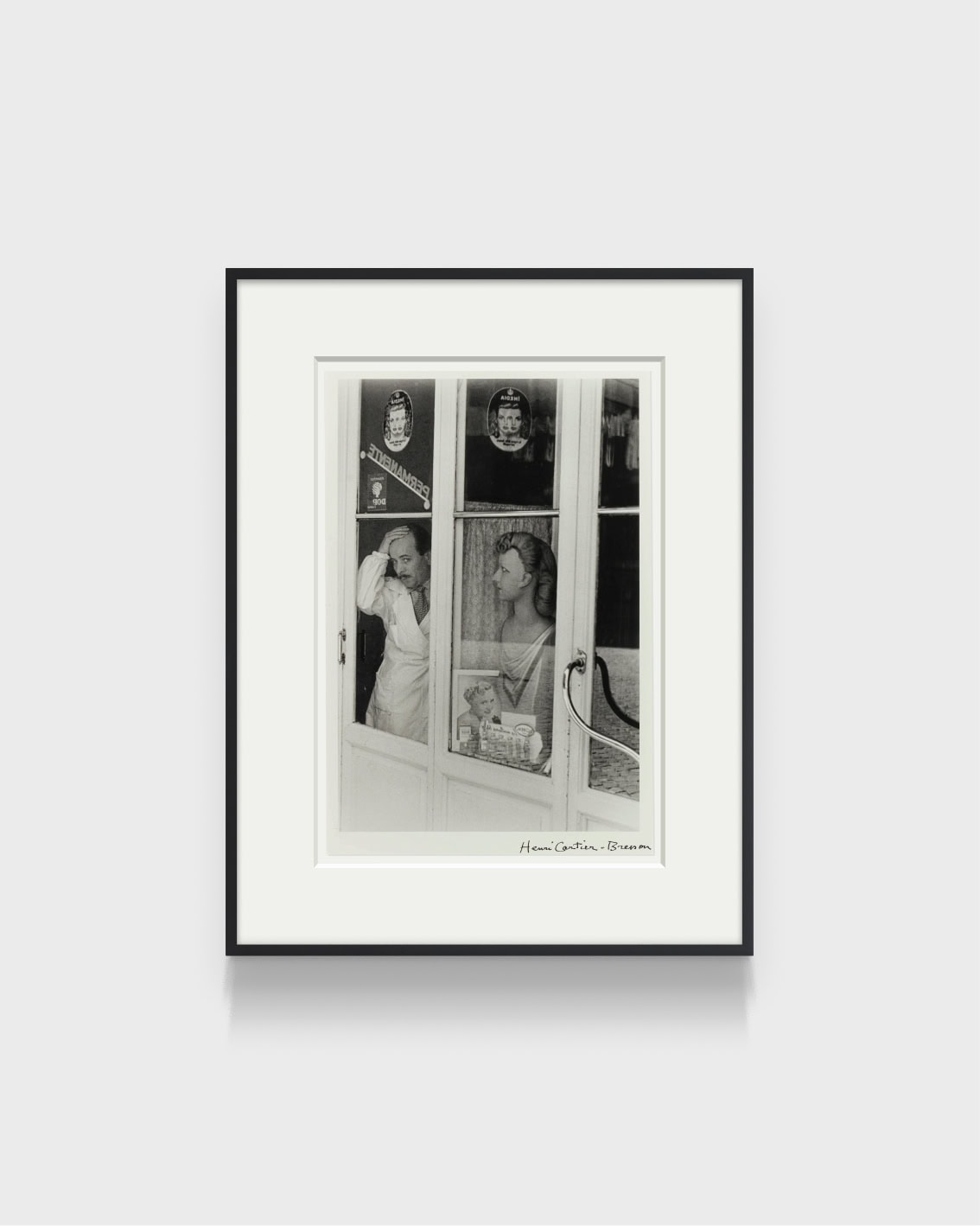
We recommend book-mounting this print in a wide passe-partout and then framing it in a black wooden box. This classic method not only gives visual priority to the image but also fits seamlessly into most interiors. However, if you prefer a different look, other framing options are also available. Additionally, to ensure the highest levels of production, all of our frames are handcrafted to museum standards by one of the UK’s leading workshops. Please note that prices include tax, but exclude framing and shipping costs.
Shipping
We aim to ship unframed works within 2 weeks and framed works within 6 weeks. All orders are shipped from the UK and we always strive to deliver your print as quickly as possible. However, the delivery times may vary, depending on the specific artwork and your location. For exact details, please get in touch. Please note that prices include tax, but exclude framing and shipping costs.
Artwork In Detail
Henri Cartier-Bresson is perhaps the most significant photographer of the twentieth-century. Striving for a perfect balance of content and formal composition in all his work, Cartier-Bresson brought a new aesthetic and practice to photography, initiated modern photojournalism, and influenced countless followers. His photographs may be summed up through a phrase of his own: “the decisive moment,” the magical instant when the world falls into apparent order and meaning, and may be apprehended by a gifted photographer.
Henri Cartier-Bresson
Rome, Italy, 1951
EnquireHenri Cartier-Bresson
France
B. 1908
EnquireCartier-Bresson (1908 – 2004) was born in Chanteloup, France, and studied Literature at Cambridge University in 1928. He began photographing in 1931 and purchased a Leica in 1933. He joined an ethnographic expedition to Mexico the next year, and in 1935 studied cinematography with Paul Strand. He assisted Jean Renoir in 1936 and 1939, and made his own documentary, Return to Life, in 1937. He was drafted into the film and photo unit of the French army in 1940 and was taken prisoner by the Germans that same year. After three years of imprisonment he escaped and began working for the French underground. In 1943 he made a series of portraits of artists, including Matisse, Bonnard, and Braque. Through 1944 and 1945, Cartier-Bresson photographed the occupation of France and its liberation. In 1947 he co-founded the Magnum agency with Robert Capa, Chim (David Seymour), and George Rodger and he spent the next twenty years traveling around the world.
