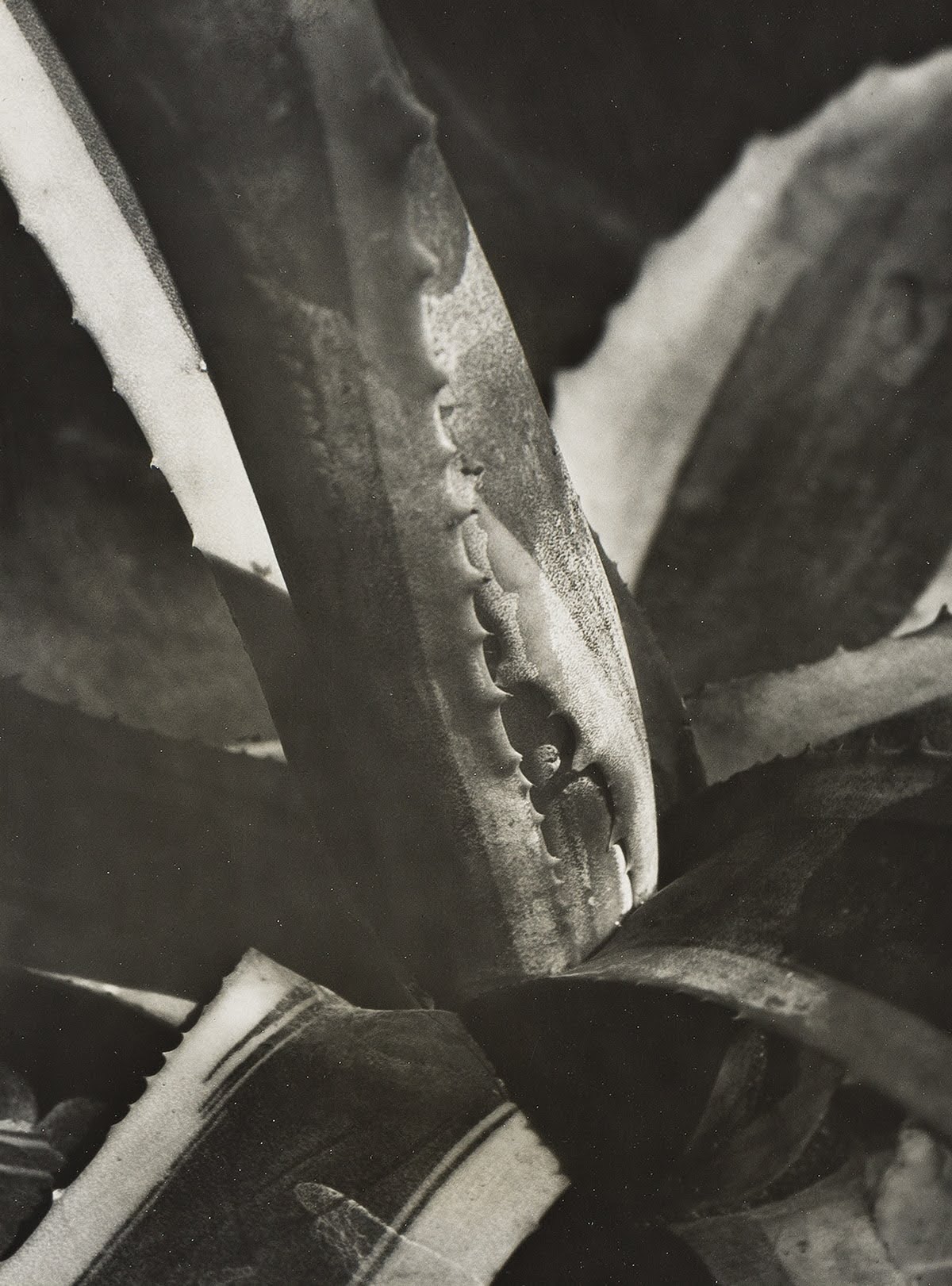
Practically adept and inherently inquisitive, Imogen Cunningham regarded her photography as an outlet to explore humour, biology, and the human experience. Oscillating between photographing portraits of sitters in her studio and the woods surrounding her home in Seattle, Cunningham afforded her photography an air of tranquillity, magic, and surrealism. Her interest in botany grew while she was studying chemistry at the University of Washington and in the 1920s, having moved to California, botanical photography became an increased focus of her output.
Imogen Cunningham Prints For Sale (1):
Artist Biography
Imogen Cunningham
United States
B. 1883–1976
EnquireWhereas Imogen Cunningham’s earlier work shows the influence of early twentieth-century Pictorialism, during the 1920s she started working in the geometric style of straight photography with the sharp linearity and vivid light of European Modernism. In 1932, she formed the group f/64 with Edward Weston and Ansel Adams, championing photography as an art form. Through her work, Cunningham sought to expose the visually profound in the mundane, focusing in particular on texture and light. She became particularly interested in photographing flowers and abstracting the shapes of the petals and leaves. In the 1940s, Cunningham turned to street photography and more traditional documentary photography, which continued to be a focus for the remainder of her career.
Born in 1883 in Oregon, United States, Cunningham studied at the University of Washington and the Technische Hochschule in Dresden, Germany. Cunningham is the recipient of a Guggenheim Fellowship and the American Academy of Arts and Sciences. Her work has been the subject of exhibitions at the Museum of Fine Arts, Boston, the Seattle Art Museum and the Getty Museum, Los Angeles. Her work is held in the permanent collections of the Museum of Modern Art, New York, the Museum of Fine Arts, Houston and the Metropolitan Museum of Art, New York, among others.
